
Brand Identity vs Brand Image Understand Real Difference
Key Takeaway
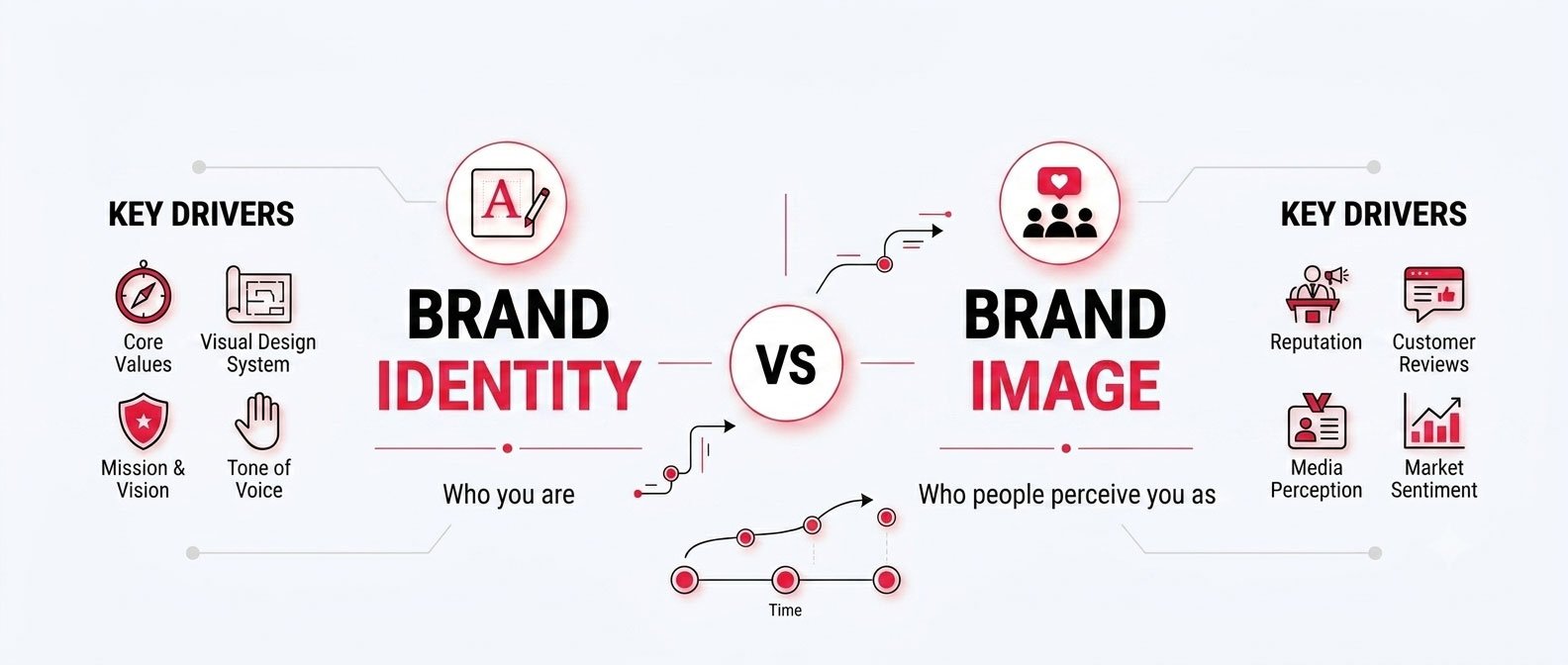
- Brand identity is what a business creates and controls; Brand image is what customers perceive and believe.
- Identity includes logos, colors, typography, tone of voice, and guidelines all fully controllable elements.
- Image is shaped by customer experience, reviews, word of mouth, and social sentiment largely outside direct company control.
- A strong identity heavily influences image but never guarantees it.
- Common branding failures come from over-focusing on visuals while ignoring the customer experience that shapes perception.
- Regularly auditing both identity and image helps businesses catch misalignment before it damages trust.
- Professional design support from brand identity to UI/UX to motion graphics helps businesses build the consistency needed for a positive brand image.
Why Businesses Keep Mixing Up Brand Identity and Brand Image
Ask ten business owners to define their “brand,” and you’ll likely get ten different answers, most of which blur two very distinct concepts: brand identity and brand image.
This confusion isn’t just semantic. It’s one of the most common reasons branding strategies fail. A company might invest heavily in a polished logo, a sleek website, and a consistent color palette (brand identity) yet still struggle with how customers actually perceive them in the market (brand image). When these two don’t align, businesses end up asking, “We have a great logo and website, so why don’t customers trust us?”
The truth is simple: brand identity is what you create; brand image is what customers believe. One is within your control. The other is shaped by experience, word of mouth, and perception over time.
Understanding this difference isn’t just an academic exercise it directly impacts customer trust, brand loyalty, and long-term revenue. Businesses that align their identity with the image customers actually hold are the ones that build lasting market positions. Those that don’t often find themselves rebranding every few years, chasing a perception they never intentionally shaped.
In this guide, we’ll break down both concepts in detail, compare them side-by-side, look at real branding mistakes, and show you how to build a brand identity strong enough to shape a positive brand image consistently.
What is Brand Identity?
Brand identity is the complete set of visual, verbal, and strategic elements a business deliberately creates to represent itself to the world. It includes everything from your logo and color palette to your tone of voice and mission statement. In short, brand identity is how a company chooses to present itself it's fully within your control.
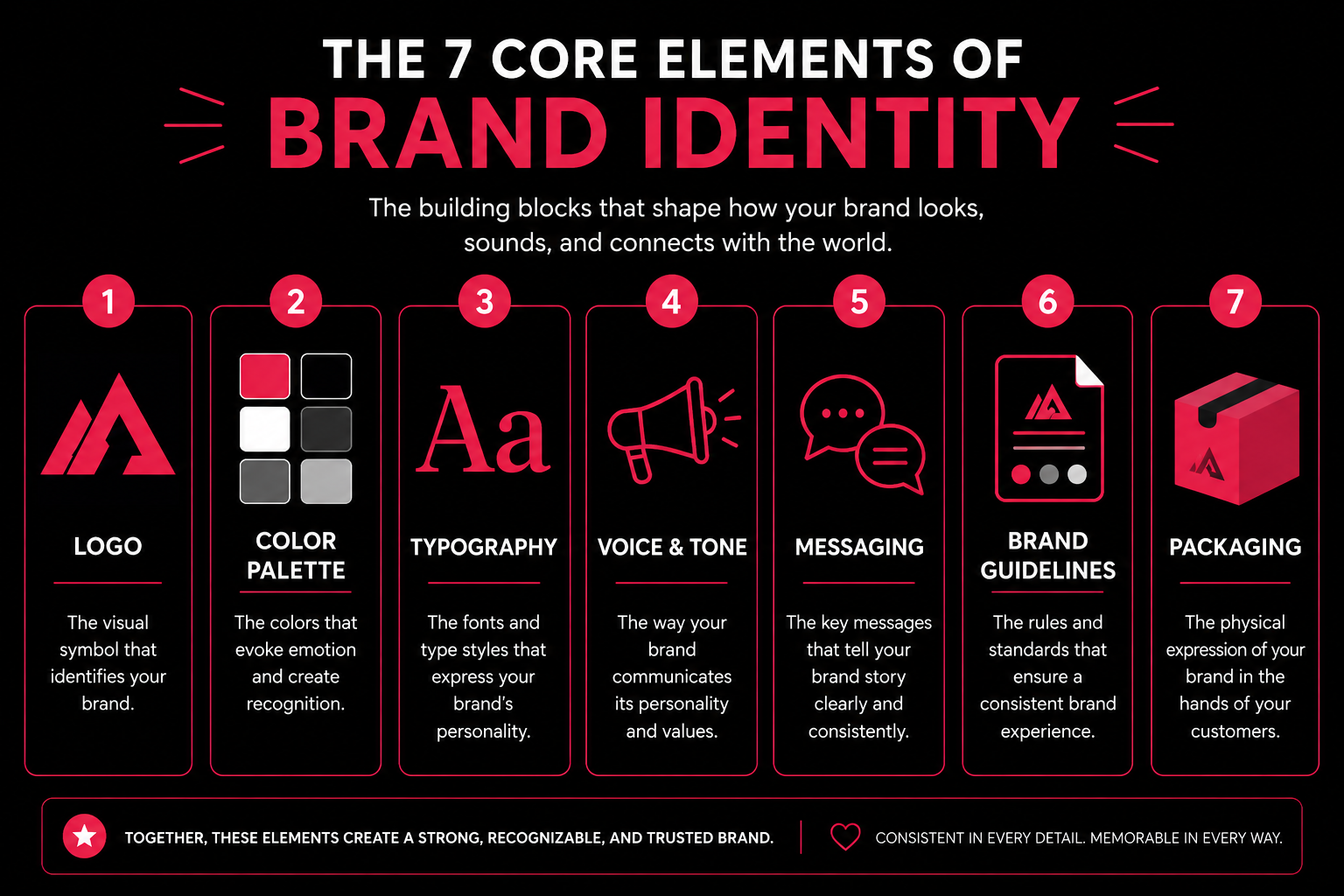
Core Elements of Brand Identity
- Logo and Visual Mark – the primary symbol representing the business
- Color Palette – psychologically chosen colors that reflect brand personality
- Typography – font choices used across digital and print materials
- Tone of Voice – how the brand communicates (formal, playful, authoritative, etc.)
- Brand Messaging – taglines, mission statements, and value propositions
- Visual Style – photography style, iconography, illustration approach
- Brand Guidelines – the rulebook that keeps all elements consistent
- Packaging and Physical Touchpoints – for product-based businesse
Real-World Examples
- Nike’s swoosh, bold typography, and “Just Do It” messaging form a tightly controlled identity system.
- Airbnb’s “Bélo” symbol and warm, community-driven visual language were deliberately engineered to communicate belonging.
- Slack’s playful color gradients and conversational tone were designed to make workplace software feel approachable.
Why Brand Identity Matters
A strong brand identity does more than look good; it builds recognition, trust, and differentiation. According to design research, consistent brand presentation across all platforms can significantly increase revenue, because familiarity breeds trust, and trust drives conversion. Without a defined identity, businesses appear inconsistent, unprofessional, or forgettable regardless of how good their product actually is.
What is Brand Image?
Brand image is the perception customers actually hold about a business shaped by their experiences, interactions, reviews, and word of mouth. Unlike brand identity, brand image is not something a company builds directly; it's the outcome of how people interpret the brand identity, products, service quality, and every touchpoint they encounter.
How Customers Develop Brand Image
Brand image forms gradually through:
- Direct experience – product quality, customer service, ease of use
- Word of mouth – recommendations or complaints from friends and family
- Online reviews and social proof – ratings on Google, Trustpilot, or social media
- Media coverage and PR – how the brand is discussed in the press
- Social media presence – tone, responsiveness, and community engagement
- Comparisons with competitors – how the brand stacks up in the customer’s mind
Why Businesses Cannot Fully Control Brand Image
Here's the uncomfortable truth: a business can design a flawless identity, but it cannot dictate what customers ultimately believe. A single bad customer service interaction, a viral complaint, or an unmet expectation can shift public perception overnight regardless of how strong the visual branding is.
This is why brand image is often described as "the brand in the eyes of the customer," while brand identity is "the brand in the eyes of the company." Businesses can influence image through consistent identity, quality, and communication, but they can never fully own it. A well-researched UI/UX Design approach, for instance, can remove friction from the customer journey and directly improve how a product is experienced one of the biggest levers a business has over its own image.
Brand Identity vs Brand Image:
| Aspect | Brand Identity | Brand Image |
| Meaning | How a business presents itself | How customers perceive the business |
| Created By | The company (designers, marketers, founders) | Customers, market experiences, and public opinion |
| Controlled By | Fully controlled by the business | Only partially influenced by the business |
| Purpose | To communicate identity, values, and positioning | To reflect real-world trust, credibility, and reputation |
| Focus | Visual and verbal consistency | Emotional and experiential perception |
| Examples | Logo, colors, typography, brand voice, guidelines | Reviews, word of mouth, social sentiment, reputation |
| Business Impact | Drives recognition and professional credibility | Drives customer trust, loyalty, and referrals |
| Long-Term Value | Builds a consistent foundation over time | Builds (or erodes) reputation based on real experience |
Why Businesses Often Confuse the Two
- Both terms use the word “brand,” leading people to assume they’re interchangeable.
- Marketing agencies sometimes use the terms loosely, especially in casual client conversations.
- Businesses focus only on visuals (identity) and assume that automatically equals reputation (image).
- Small businesses lack formal branding education, relying on instinct rather than strategy.
- Short-term thinking, companies chase quick visual rebrands instead of addressing the deeper perception issues customers actually have.
The result? Companies spend money redesigning logos when the real problem is inconsistent customer service, or they ignore their visual identity entirely and wonder why customers don’t take them seriously.
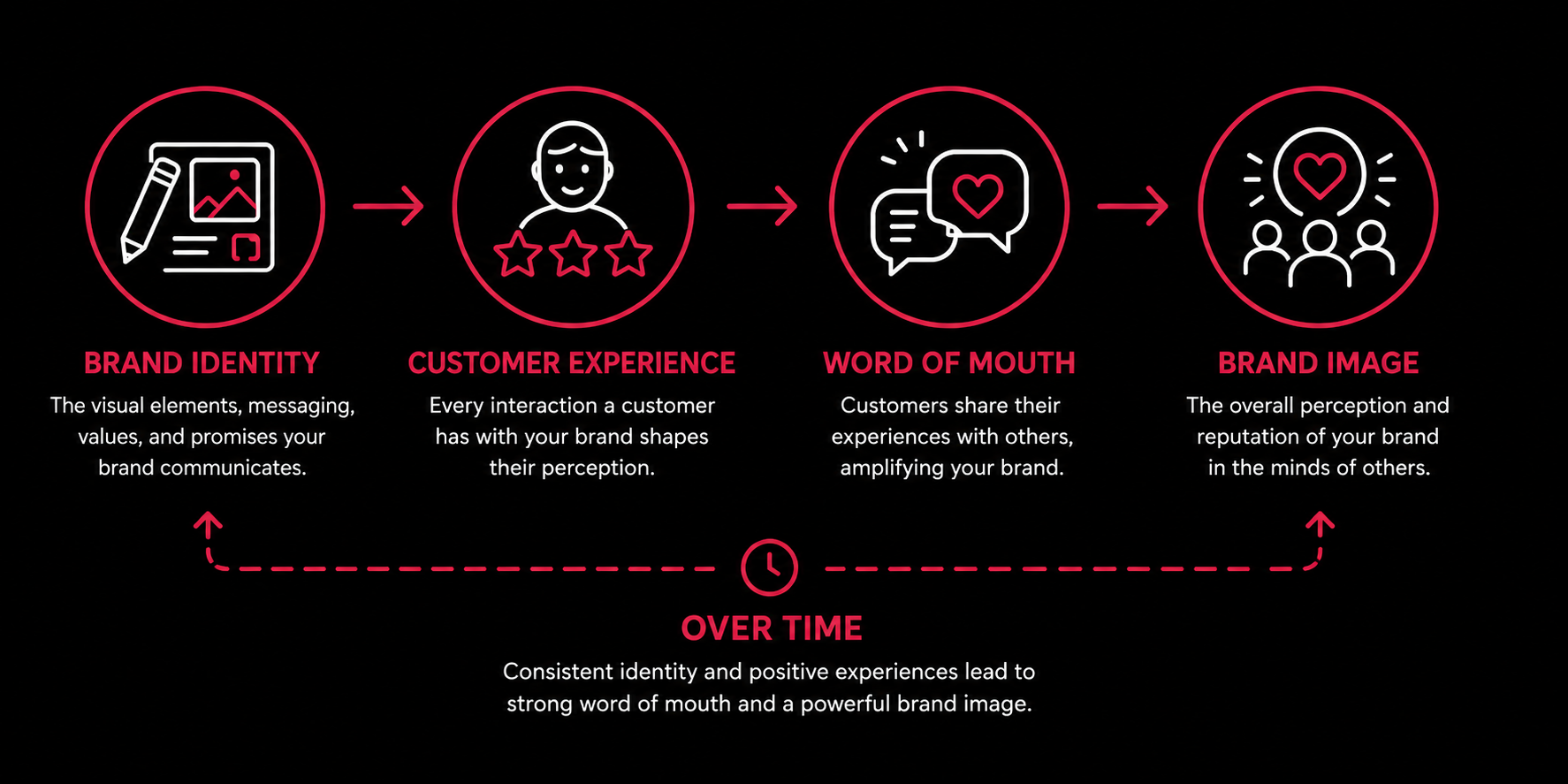
How Brand Identity Shapes Brand Image
While a business can’t control brand image directly, brand identity is the single biggest lever it has to influence it. Here’s how the connection works:
- Consistency builds trust – When a logo, tone, and message stay consistent across every platform, customers subconsciously associate the brand with reliability.
- Visual quality signals product quality – A polished website and UI often lead customers to assume the product or service is equally polished.
- Tone of voice sets expectations – A playful brand voice invites casual engagement; a formal one signals authority and precision.
- Design shapes first impressions – Studies in consumer psychology consistently show that visual judgments form within seconds and heavily influence trust in the moments that follow.
In short: strong brand identity doesn’t guarantee a strong brand image, but weak brand identity almost always damages it. Identity is the input; image is the outcome and the two are deeply, though imperfectly, linked.
Signs Your Brand Identity Needs Improvement
- Your logo, colors, or fonts look inconsistent across platforms
- Your website feels outdated compared to competitors
- Customers can’t describe what your brand stands for
- Your messaging changes tone depending on the platform
- You don’t have documented brand guidelines
- New team members struggle to represent the brand correctly
- Your visual identity hasn’t evolved in 5+ years despite market changes
Signs Your Brand Image Needs Improvement
- Customer reviews mention service or trust issues repeatedly
- Social media sentiment is neutral or negative
- Customers confuse you with competitors
- Referral and repeat-purchase rates are declining
- There’s a gap between what you promise and what customers experience
- Negative press or complaints outweigh positive mentions
- Customer support tickets reveal recurring frustration
Common Branding Mistakes Businesses Make
- Treating a logo redesign as a complete rebrand identity is more than a symbol.
- Ignoring brand guidelines, leading to inconsistent visuals across teams and platforms.
- Copying competitors’ visual style instead of building a distinct identity.
- Neglecting the customer experience while over-investing in visuals.
- Failing to monitor brand image through reviews, social listening, or customer feedback.
- Inconsistent tone of voice across website, social media, and customer support.
- Rebranding too often, which confuses customers and dilutes recognition.
- Underestimating UX design’s impact on perception, a confusing website damages trust just as much as poor customer service.This is especially common among software companies, where unclear onboarding or cluttered dashboards can undo months of brand-building; this is exactly the gap that focused SaaS Design work is meant to close.
How to Build a Strong Brand Identity
Step 1: Define Your Mission and Vision
Before any visual work begins, clarify why your business exists and where it’s headed. This foundation informs every design and messaging decision that follows.
Step 2: Understand Your Audience
Research your target audience’s preferences, pain points, and expectations. A brand identity that resonates with a Gen Z audience will look and sound very different from one built for enterprise B2B clients.
Step 3: Build a Visual Identity System
Develop your logo, color palette, typography, and iconography as a cohesive system not isolated design choices. Every element should work together across digital and print formats.
Step 4: Create Comprehensive Brand Guidelines
Document exact usage rules for logos, colors, fonts, spacing, and tone of voice. This ensures consistency even as your team, agencies, or platforms change.
Step 5: Maintain Consistency Across All Touchpoints
Apply your identity uniformly across your website, social media, packaging, email, and customer support. Inconsistency is one of the fastest ways to erode brand recognition.
Step 6: Design Intentional Customer Experiences
Identity isn’t just visual it’s experiential. Every interaction, from your website’s UX to your onboarding email, should reflect the same brand personality and values.
How Design Dreamatix Helps Businesses Build Powerful Brands
Building a brand that’s both visually strong and perceived positively requires more than good design instincts. It requires strategy, consistency, and cross-platform execution. This is where a dedicated design partner makes a measurable difference.
Brand Identity Design lays the foundation logos, color systems, typography, and messaging frameworks built to reflect a business’s actual positioning, not generic trends.
Website Design translates that identity into a digital experience, ensuring visitors form the right first impression within seconds of landing on a page.
UI/UX Design focuses on how customers actually interact with digital products, reducing friction and reinforcing trust through thoughtful, research-backed interfaces.
SaaS Design addresses the specific challenges of software products, onboarding flows, dashboard clarity, and feature discoverability, where clarity directly affects retention.
Landing Page Design creates focused, conversion-oriented pages that align visual identity with a specific customer action, whether that’s a signup, purchase, or demo request.
Motion Graphics adds a dynamic layer to brand storytelling, helping businesses communicate complex ideas or product value through short, engaging visual narratives.
Each of these services addresses a different touchpoint in the identity-to-image pipeline, helping businesses not only look consistent, but be consistent in ways that shape a genuinely positive brand image over time.
Design Dreamatix
Ready to Build a Brand People Remember?
Your brand identity defines who you are, while your brand image reflects how customers perceive you. When both are aligned, your business earns trust, stands out from competitors, and creates lasting customer relationships.
At Design Dreamatix, we help businesses create memorable brand identities through strategic branding, logo design, visual identity systems, and user-focused digital experiences that leave a lasting impression.
Conclusion
Brand identity and brand image are two sides of the same coin one is what you build, the other is what customers believe. Businesses that only focus on visual polish while neglecting the customer experience often find themselves confused by a gap between how they see themselves and how the market actually perceives them.
The real work of branding isn’t choosing between identity and image it’s making sure they’re aligned. That means building a clear, consistent, and intentional brand identity, and then following through with the product quality, service, and communication that turns that identity into a genuinely trusted brand image.
Take a moment to evaluate your own brand: does your visual identity match the perception your customers actually hold? If there’s a gap, it’s worth addressing before it grows wider.
If you’re ready to build a brand identity strong enough to shape a lasting, positive brand image, Design Dreamatix is here to help from brand identity design to website design, UI/UX, SaaS design, landing pages, and motion graphics. Get in touch with Design Dreamatix for a branding and design consultation tailored to your business.
Frequently Asked Questions
Some pre questions and answers
Q1. Is brand identity the same as branding?
No. Branding is the overall strategic process of building a brand, while brand identity refers specifically to the visual and verbal elements logo, colors, tone used within that broader strategy.
Q2. Can brand image change over time?
Yes. Brand image is fluid and shifts based on customer experiences, market trends, PR events, and consistency (or inconsistency) in service delivery.
Q3. Does a logo define brand identity?
No. A logo is one component of brand identity, but true identity includes typography, color psychology, tone of voice, and brand guidelines working together.
Q4. Why is brand consistency important?
Consistency builds recognition and trust. When customers see the same visual and verbal identity across every platform, they're more likely to remember and trust the brand.
Q5. Can startups build a strong brand identity with a limited budget?
Yes. Startups can build strong identities by focusing on a clear mission, a simple but distinctive visual system, and consistent application. Expensive campaigns aren't a prerequisite for strong branding.
Q6. How long does building a brand identity typically take?
Depending on complexity, a professional brand identity project can take anywhere from 3 to 8 weeks, covering research, design, and guideline documentation.
Q7. What factors affect brand perception the most?
Customer service quality, product reliability, online reviews, social media presence, and how well the brand delivers on its promises all shape perception.
Q8. Why should businesses invest in professional branding?
Professional branding creates consistency, builds trust faster, and differentiates a business in competitive markets directly impacting customer acquisition and retention.
Q9. Can a business have a strong brand identity but a weak brand image?
Yes. This happens when visual branding is polished but the actual customer experience service, product quality, or support fails to meet expectations.
Q10. Should brand identity be updated periodically?
Yes, but thoughtfully. Minor refreshes every few years keep a brand relevant, while complete overhauls should only happen when the business's mission or market position fundamentally changes.